On Cognitive Design
Issue 05
New Year, Smart Org
The 8 Domains Every Business Must Master

The Resolution That Actually Works
Every January, leaders resolve to "work smarter." They buy productivity apps, reorganize teams, launch transformation initiatives. By March, most have abandoned ship.
The problem isn't willpower. It's architecture.
Working smarter requires knowing what to work on. And that requires understanding how organizations actually think — not as monolithic entities, but as interconnected domains of intelligence that must develop together.
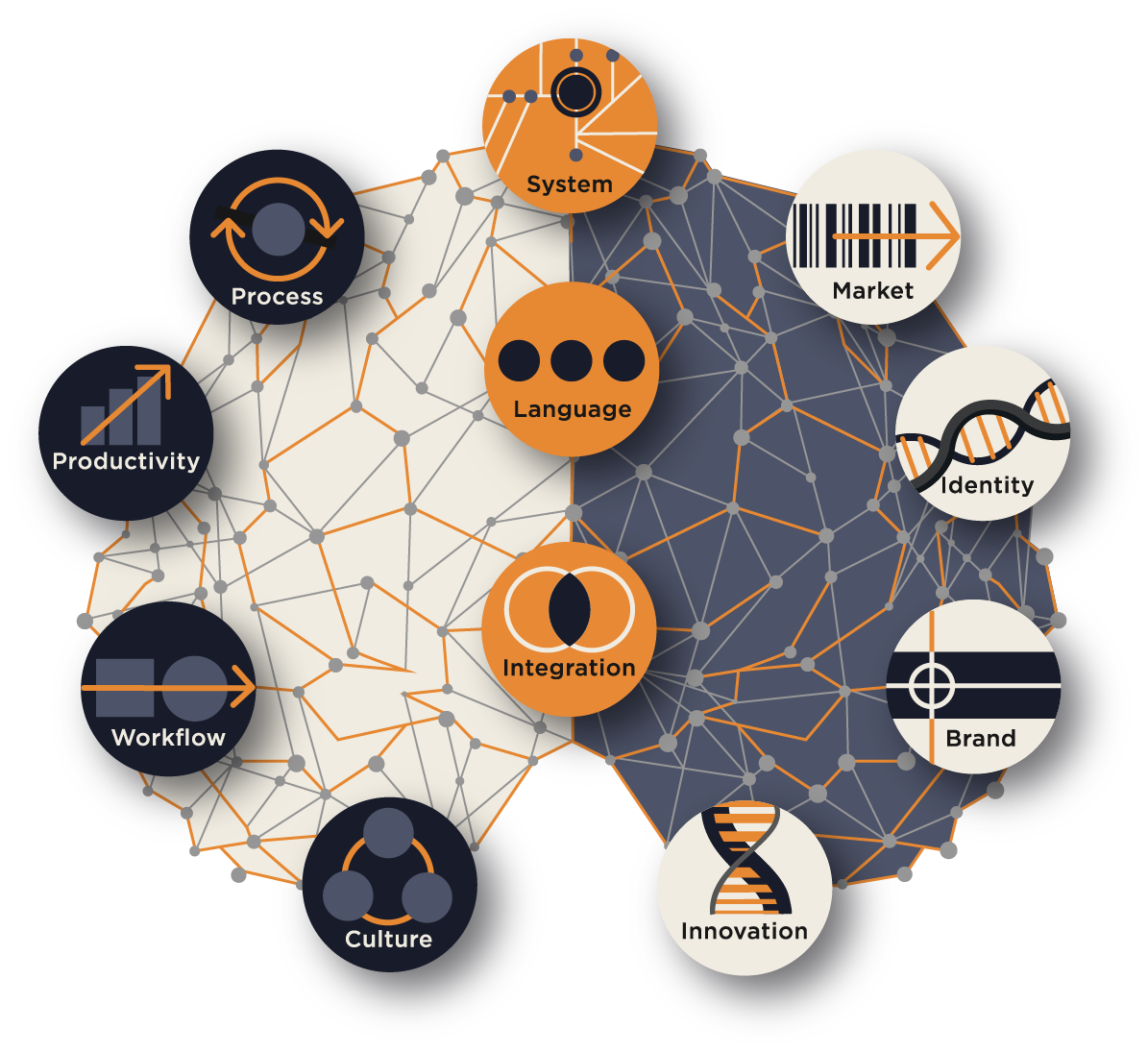
These domains are called Cognates — neural processing centers where organizational knowledge lives. Just as the human brain has specialized regions for language, memory, and motor function, organizations have specialized domains for identity, market position, workflow, and culture.
There are eleven Cognates in total. Three activate the system. But eight drive the work — four for innovation, four for optimization. Master these eight, and your organization develops the capacity to think.
The Two Systems
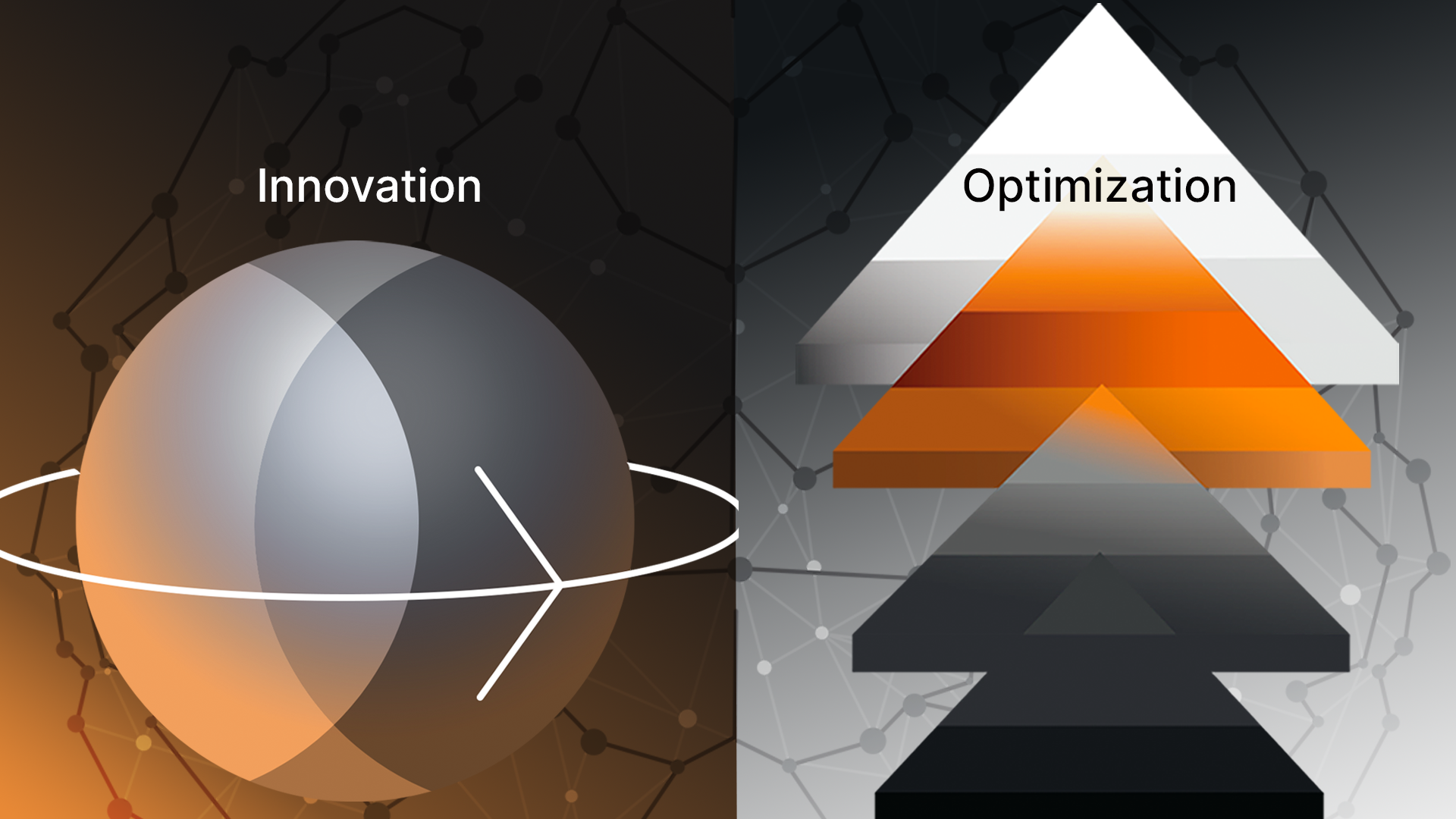
Organizations need two capabilities that seem to oppose each other:
Innovation — the right brain. Creating new value, finding market position, expressing identity. This is where strategy lives.
Optimization — the left brain. Executing efficiently, improving processes, building culture that endures. This is where operations live.
Most organizations overdevelop one at the expense of the other. Startups innovate brilliantly but can't execute consistently. Enterprises optimize relentlessly but can't adapt to change.
The eight Cognates balance both — four for each system, working together.
The Innovation System
What makes you compelling
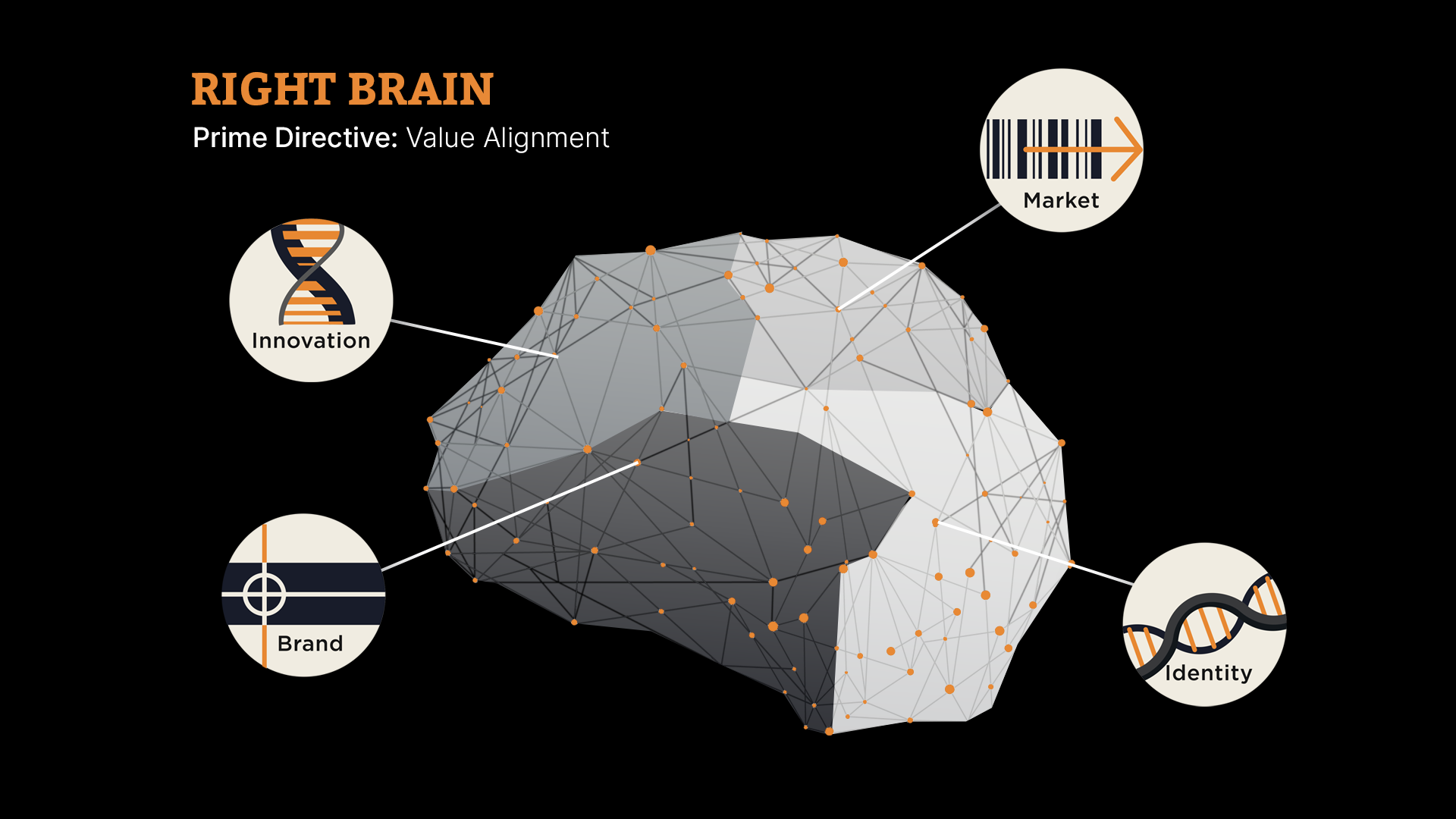
1. Identity — Who You Are
Every organization has values. Few have codified them into intelligence.
Identity isn't your mission statement. It's the 17 Value Systems that drive every decision — from your human purpose (WHY) to your unique value proposition, from the problem you solve to the features you deliver.
The framework: Value-Centric Design discovers values through structured conversation, creating self-validating systems that prove themselves through operation. A customer-obsessed company validates itself through customer behavior — they return, spend more, tell others. No surveys needed.
The paradigm shift: FROM aspirational values on walls → TO operational values in decisions.
2. Market — Where You Compete
Traditional strategy asks "How do we win?" The better question: "What game should we create?"
Market position isn't about outcompeting rivals. It's about finding the Open Road — uncontested space where you set the standards.
The frameworks: Four Corner Analysis maps competitive landscapes to reveal where competitors cluster and where they don't. The Open Road Canvas designs mission-centered business models. The Four Factor Method (Traffic × Conversion × Price × Retention) engineers multiplicative growth.
The paradigm shift: FROM fighting for market share → TO creating markets where you lead.
3. Innovation — What You Create
Products fail when they solve the wrong problem brilliantly. Innovation Intelligence ensures you build what markets actually want.
The frameworks: Customer Value Mapping transforms your internal view (what you build) into external perception (why they care). Market Value Mapping translates your beliefs into category position. Together, they track how value evolves from MVP through market dominance.
The paradigm shift: FROM building features → TO creating value that compounds.
4. Brand — How You're Known
Brand isn't what you claim. It's what the market believes about you — validated by signals you can't manufacture.
The frameworks: The Four Laws of the Social Marketplace reveal how markets naturally reward authentic value. The Four Quadrants of Impact Branding (Innovation, Trust, Identity, Purpose) create systematic positioning. Hidden Hand validation tracks the signals that confirm or correct your position in real-time.
The paradigm shift: FROM brand-market fit (does messaging resonate?) → TO value-market fit (do values create impact?).
The Optimization System
What makes you effective
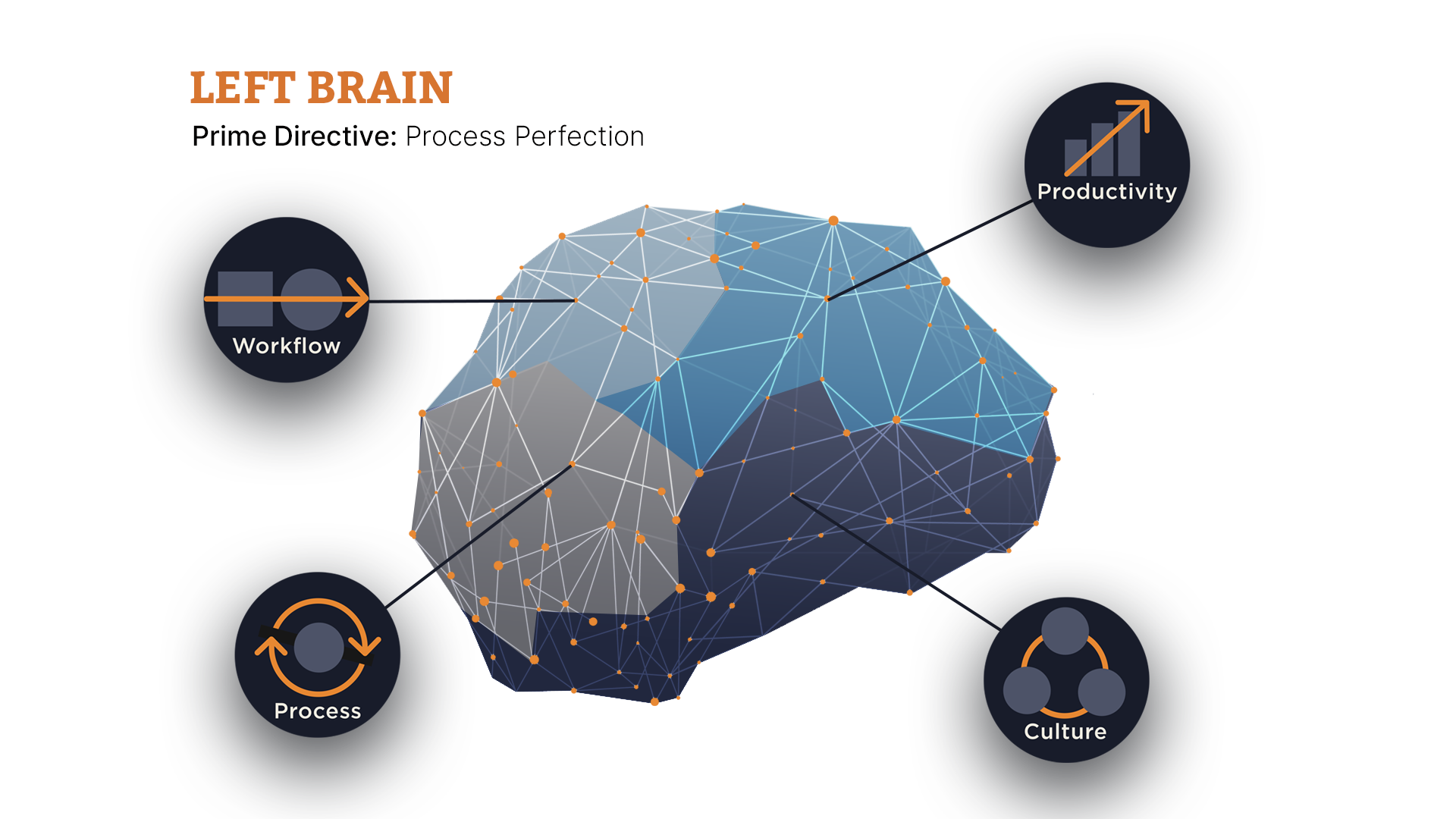
5. Productivity — How You Measure
Most productivity advice optimizes the wrong work. The Genius Paradigm flips the question: What should you stop doing?
The frameworks: The Innovation Zone identifies your highest-leverage work — where your unique capabilities create disproportionate value. The Task Replacement Matrix sorts everything else into four quadrants: Eliminate, Systematize, Minimize, or Protect. The Ultimate KPI tracks progress toward working exclusively in your zone.
The paradigm shift: FROM doing more → TO doing what matters.
6. Workflow — How You Operate
Organizations drown in communication chaos — endless emails, unclear ownership, invisible work. The Nine Disciplines create systematic clarity.
The frameworks: Signal Clarity (Disciplines 1-3) implements Decision Intelligence (Delete/Deal/Defer), Communications Design, and Six Levels of Delegation. Project Clarity (Disciplines 4-6) creates Idea Routing, Radical Transparency through Kanban, and Adaptive Ownership.
The paradigm shift: FROM managing chaos → TO preventing it.
7. Process — How You Improve
Process Perfection isn't about rigid procedures. It's about systematic improvement that compounds.
The frameworks: The OAO Methodology completes the Nine Disciplines: Optimize (eliminate waste, document standards), Automate (deploy technology strategically), Orchestrate (coordinate human-AI work at scale). Standing Operating Protocols ensure consistency without rigidity.
The paradigm shift: FROM firefighting → TO prevention through design.
8. Culture — How You Endure
Silicon Valley celebrates disruption. But the world's oldest companies — some over 1,400 years old — teach different lessons. They survive through traits that transcend eras, technologies, and leaders.
The frameworks: The Eight Traits of Endurance identify universal patterns: Value-Centricity, Adaptability, Innovation, Financial Stewardship, Relational Trust, Visionary Clarity, Brand Authenticity, and Talent Magnetism. Parallax Leadership develops the capacity to see challenges from multiple perspectives — hierarchical, functional, temporal, and stakeholder.
The paradigm shift: FROM culture as vibe → TO culture as architecture.
The Integration
These eight Cognates don't operate in isolation. They reinforce each other:
Identity informs Market position. Market position shapes Innovation priorities. Innovation validates Brand claims.
Productivity focuses effort. Workflow executes it. Process improves it. Culture sustains it.
When all eight develop together, something emerges that neither system produces alone: organizational intelligence — the capacity to think, adapt, and evolve without constant intervention.
This is what separates Smart Orgs from the rest.
The Path Forward
You don't need to master all eight Cognates simultaneously. Start where the pain is sharpest:
If you're unclear on direction → Start with Identity (ID10). Discover your 17 Value Systems.
If you're competing on price → Start with Market (MA10). Find your Open Road.
If products aren't landing → Start with Innovation (IN10). Map customer value.
If messaging isn't working → Start with Brand (BR10). Validate through Hidden Hand signals.
If you're drowning in busywork → Start with Productivity (PD10). Find your Innovation Zone.
If communication is chaos → Start with Workflow (WF10). Implement Signal Clarity.
If quality is inconsistent → Start with Process (PR10). Deploy OAO methodology.
If turnover is high → Start with Culture (CU10). Build for endurance.
Each Cognate installs through natural conversation — no code required, no consultants needed. The frameworks guide discovery. The PMNs capture what you learn. The system remembers.
This is how organizations become smart: not through a single transformation, but through systematic development of the domains that matter.
On Cognitive Design is a weekly newsletter on organizational intelligence and information sovereignty in the AI age.
Chris Kincade is the founder of Starling AIX and creator of Universal Cognitive Architecture.
.png)