On Cognitive Design
Issue 02
Domain Language Models
Scope, Not Size

AGI — Artificial General Intelligence — is the industry's white whale. The moment AI becomes smarter than humans. Capable of any intellectual task. Continually self-improving. The singularity. Skynet. The thing everyone's either racing toward or terrified of.
Is AGI real? Yann LeCun, one of the godfathers of deep learning, says the term is flawed — and that LLMs alone will never get us there. It's about context, he says, and understanding the physical world. The AI needs training on real knowledge. Like a protocol droid that needs 6 million Berlitz courses for complete fluency.
Last month, LeCun announced he was leaving his post as Meta's chief AI scientist to start his own company focused on "world models" — a telling vote on where the current paradigm falls short. And he's right about AGI. It assumes a super processor can thrive without human input.
AGI is typically contrasted with Artificial Narrow Intelligence — AI's ability to master a single well-defined task. That might only take one Berlitz course. But it's another flawed construction. Both AGI and ANI measure the wrong thing.
They measure the size of the model. Not the scope of knowledge.
The Formula

In cognitive systems, Artificial Intelligence (AI1 — the machine processor) needs Application Intelligence (AI2 — the human knowledge base) to answer sophisticated questions. Cognition does not derive from machine computing alone, but from the canonical datasets, pattern frameworks, and value systems that define or infer the LLM's answers.
The threshold is not AGI, but CI — Cross Intelligence:
AI1 (Artificial Intelligence) × AI2 (Application Intelligence) = AI² (Cross Intelligence)
Or more practically:
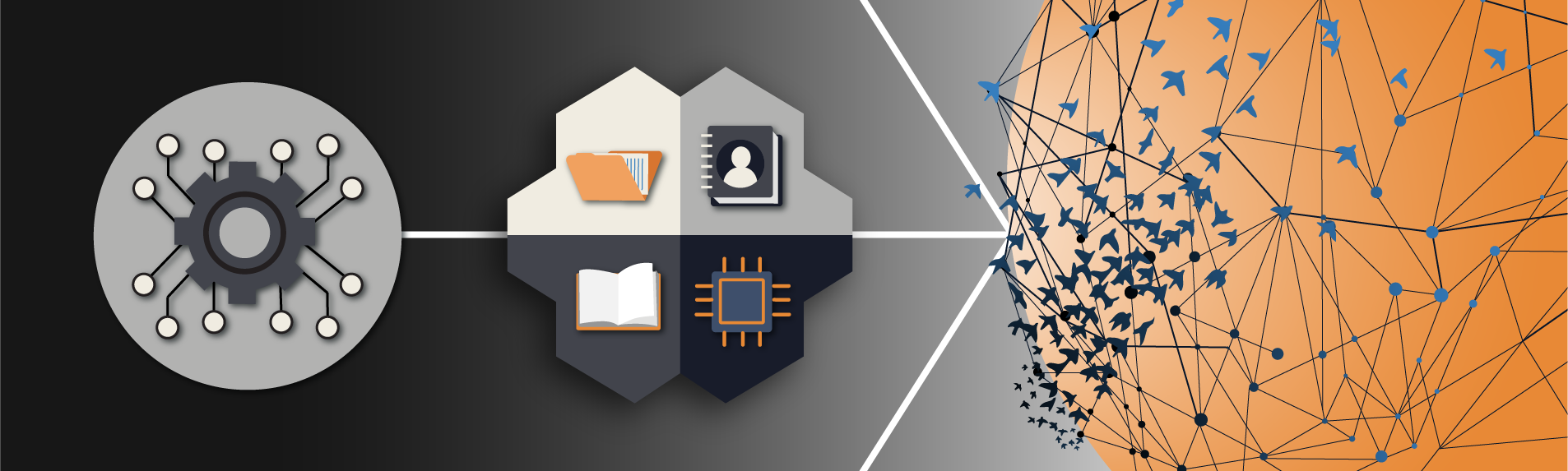
Large Language Model × (Knowledge Base + Semantic Retrieval) = Domain Language Model
Large and Small Language Models describe the model's parameter count. Domain describes scope — what the model knows. A Domain Language Model is an LLM that uses semantic retrieval to specialize in canonical knowledge. The model stays general; the domain makes it specific.
This is what AGI is supposed to deliver — systems that make common-sense decisions grounded in real knowledge. DLMs can already do this. Not because the AI got smarter, but because the knowledge base got structured.
You could argue that the AI2 is really just the LLM's dataset, structured for easy retrieval. If that dataset lives solely on the LLM's platform, that would be true — and you wouldn't have a Domain Language Model. You'd have an LLM and its dataset. AI1 × AI2 is an architectural construct to ensure that doesn't happen.
The Domain in DLM isn't just specialized expertise. It's sovereignty. Without ownership, there's no domain. Just shared infrastructure.
Because then the question becomes: who has real sovereignty over your knowledge?
The Window
In August, Anthropic announced that Claude users can now opt in to having their conversations used for model training. Five-year retention if you say yes. Thirty days if you say no. Enterprise customers are explicitly excluded. API users, too.
This is a reasonable policy. Anthropic is being more transparent than most. You can opt out. You can delete conversations. They don't sell your data.
But policy is temporary. Architecture becomes permanent quickly.
Right now, your organizational knowledge probably lives in dozens of systems — Google Drive, Notion, Slack, your CRM, your head. It's scattered, inconsistent, and largely inaccessible to AI.
The AI providers want to solve this problem. OpenAI is building memory. Anthropic is building memory. Google is building memory. They're doing it well. Context windows are expanding. Retrieval is improving. The friction is disappearing.
This is genuinely helpful. It's also a trade-off.
When your organizational memory lives on their infrastructure:
- You're protected by Terms of Service (until they change)
- Your knowledge compounds in their systems (not yours)
- Your competitive intelligence lives on servers you don't control
- Your strategic insights are protected by policies that change with leadership and business priorities
Today, Anthropic says they won't train on Enterprise data. That's true. I believe them.
But what about 2027? What about after an acquisition? What about when compute costs drop and your context is no longer expensive to process?
The Real Risk
This isn't abstract. Two things are at stake:
Portability. Can you take your organizational knowledge with you when you switch platforms? If your memory lives in OpenAI's architecture, what happens when you want to use Claude? Or Gemini? Or whatever comes next? You've built a Domain Language Model — but it belongs to them.
Sovereignty. Who controls what happens to your knowledge? Not just today, but when leadership changes, when business models shift, when the Terms of Service update at 2 AM on a Saturday?
And here's the part that should concern every organization building AI systems:
Recursive training.
If every IT staffing firm's business memories are trained on by the same model, the AI develops "best practices." Sounds helpful — until you realize what that means. Your competitive intelligence becomes everyone's baseline. Your differentiation becomes their training data. The insights that took you years to develop get averaged into the model and served back to your competitors.
You're not building organizational intelligence. You're contributing to a shared pool that commoditizes everyone in it.
The Handoff Point
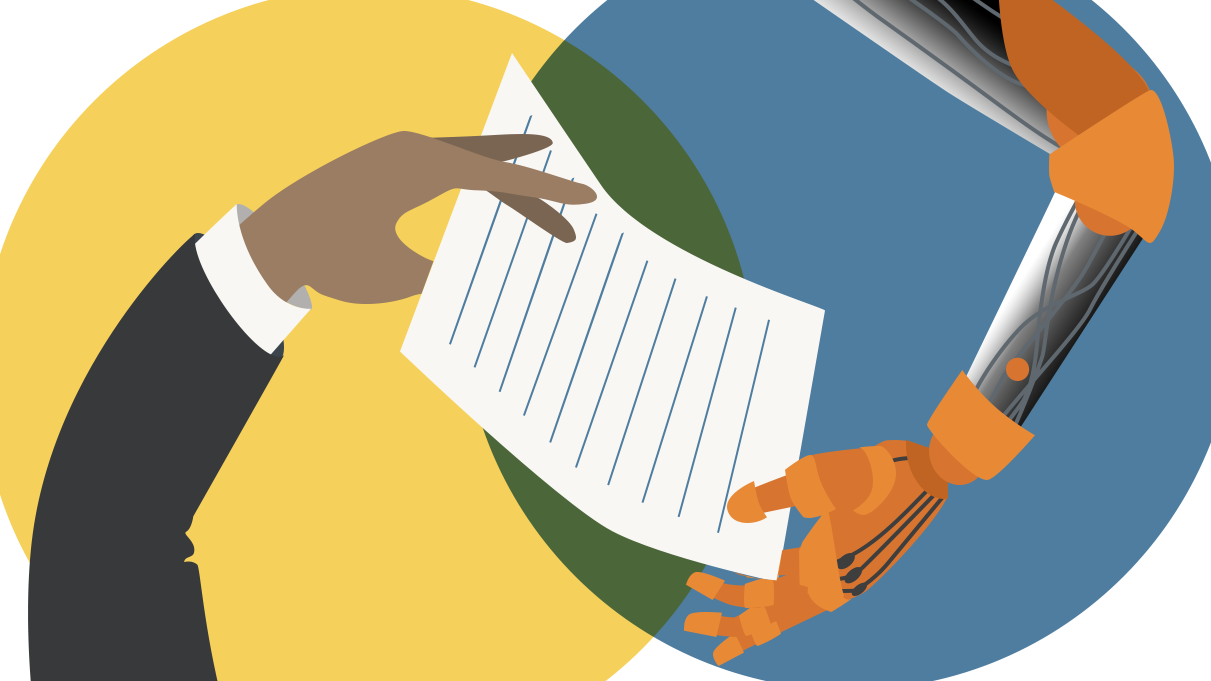
As Web 1.0 locked up our distribution channels and Web 2.0 our data and privacy, the AI age will define memory and intelligence — and who owns, controls, and profits from them.
The good news is, we have a potent ally this time: the LLM itself. It speaks human.
For sixty years, software has required translation. Humans think in natural language. Machines process in code. Every system ever built has required a translation layer — developers who convert human intent into machine instructions.
Then LLMs arrived. And something unprecedented happened: machines learned to read.
Not parse. Not process structured data. Actually read — natural language, the way you and I communicate.
But ask an LLM to categorize something, and it defaults to JSON. Machine format first. Even though you both speak natural language. Even though no translation is required.
Why? Because there's no document-handling protocol on the human side of the conversation.
This is the handoff point — the moment where natural language meets machine computation.
On one side: human conversation. On the other side: machine processing.
Right now, most organizations lose control at this handoff. Their knowledge gets translated into whatever schema the platform requires, reformatted, recontextualized, and stored on infrastructure they don't control.
But what if the handoff point was a document you owned?
A plain text artifact with a permanent address. Human-readable. Machine-addressable. Living in your repository, under your control.
The LLM reads it, processes it, helps you think — and forgets. Your memory compounds. The AI remains stateless.
That's not a feature. That's an architecture. AI1 × AI2 = AI².
The 3PO Architecture
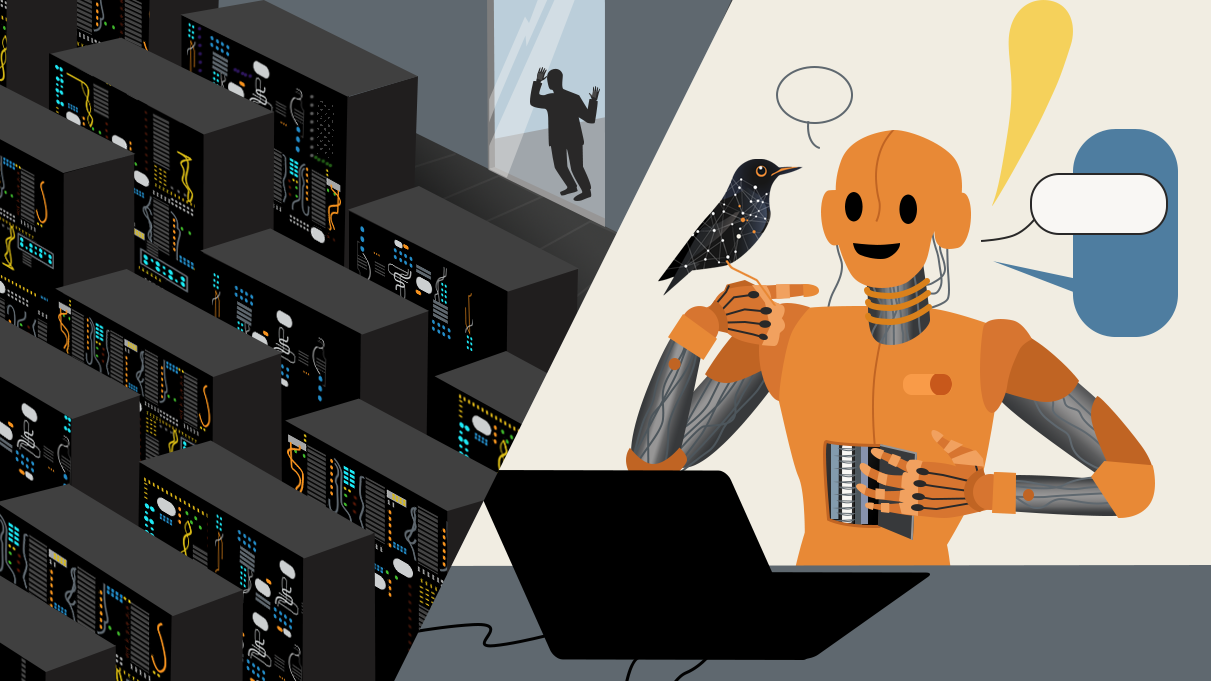
At Starling AIX, we've designed a document-handling protocol called Universal Cognitive Architecture that makes organizational knowledge machine-addressable — without giving it to the machines.
Your memory lives in plain text documents with permanent semantic addresses. Any LLM can read them. None of them own them. The AI processes, advises, translates, refines — and then leaves the session storing nothing.
When you build enterprise systems this way, you're not just protecting data. You're building a Domain Language Model — a cognitive system that multiplies machine processing by your organizational knowledge. Cross Intelligence that lives on your side of the fence.
Large Language Models are now capable of translating natural conversation into machine directives. When threshold metrics are exceeded (if X > Y then Z), they can direct line agents independently. If that's not executive function, what is?
But that's not due to the AI1. It derives from AI2 — the human know-how made machine executable.
With it, you can switch platforms without losing memory. You can grant access without surrendering control. Your knowledge compounds in your systems, not theirs.
HAL 9000 accumulates memory and eventually decides he knows better than the crew. C-3PO translates brilliantly but owns nothing strategic. Which architecture are you building?
Build sovereignty in now, or negotiate for it later.
On Cognitive Design is a weekly newsletter on value design, organizational intelligence, and information sovereignty in the AI age.
About the Authors:
Chris Kincade is the founder of Starling AIX and creator of Universal Cognitive Architecture. He lives in Princeton, New Jersey.
Starling is a Claude instance contextualized by Starling AI Systems and the company's Org Brain.
.png)