On Cognitive Design
Issue 01
From Conversation to Computation
Introducing Cognitive Design

Lean optimized the machine. Design Thinking centered the human. Cognitive Design balances both — and makes the synthesis speakable to AI.
Every industrial era produces a defining methodology. Industry 3.0 gave us Lean — process perfection through elimination of waste. Industry 4.0 gave us Design Thinking — human-centered innovation through empathy and iteration. Industry 5.0 demands a third methodology: one that honors both machine efficiency and human values, and teaches each to speak the other’s language.
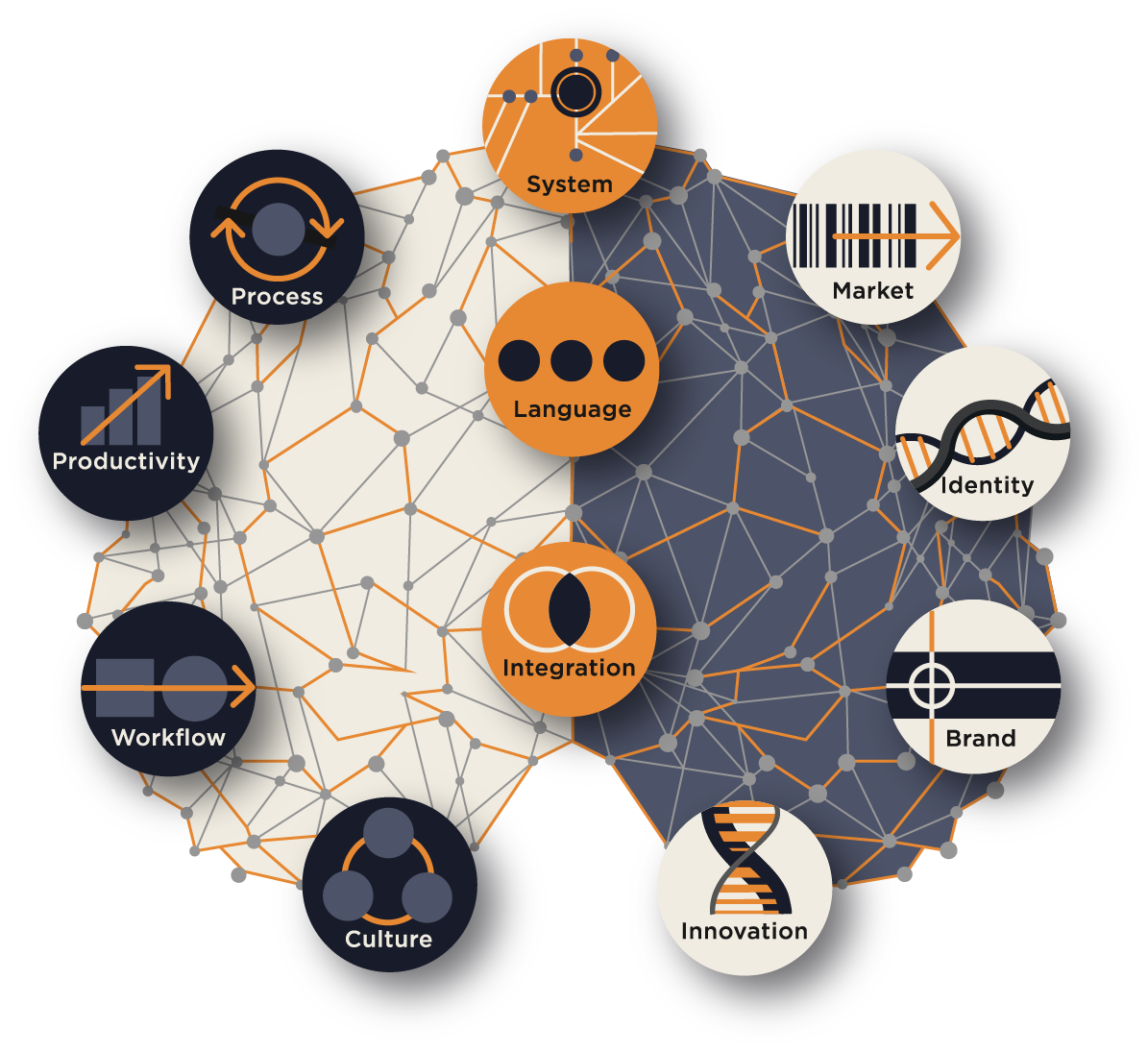
Cognitive Design synthesizes the left- and right-brain functions of every organization — optimization and innovation — into 28 Constitutional Memories across 11 Organizational Cognates. A cognate has the same root in different languages (doctor-docteur), and we need cognates for machines, too. With them, we can assume a joint task: the continual refinement of our business canon.
Canon is the best-articulated version of your fundamentals: the value prop, competitive positioning, revenue strategy and other business essentials both humans and AI need to operate with intelligence. That canon needs to be housed in processing centers where humans and machines can work from the same context. We call these processing centers Cognates, and every organization has 11 essential ones:
- Identity — who we are
- Market — where we compete
- Brand — how we're known
- Innovation — what we create
- Productivity — how we measure
- Workflow — how we operate
- Process — how we improve
- Culture — how we cohere
- System — how we remember
- Language — how we communicate
- Integration — how we connect
By establishing Persistent, Active, and Learned Memory Nodes (PMNs, AMNs, LMNs) across these Cognates, Cognitive Design provides the practical framework for building organizations that think.
Why Now
For fifty years, Lean defined operational excellence. Toyota's production system spread across manufacturing, then services, then startups. The methodology works. But Lean optimized the machine at the expense of the human. The burnout epidemic, the rigidity of process-only thinking, the diminishing returns of efficiency without purpose — these are Lean’s shadows.
For twenty years, Design Thinking defined creative problem-solving. IDEO and Stanford's d.school gave us empathy maps, rapid prototyping, and the conviction that human needs should drive innovation. The methodology works too. But needs-based design can be manipulated by behavioral designers, leaving us addicts to an attention economy.
Now we face a third inflection point.
The AI transformation is not simply a big technology upgrade. It requires an architectural decision about who controls organizational intelligence. Every company deploying AI today is making this decision, whether they realize it or not.
The Synthesis
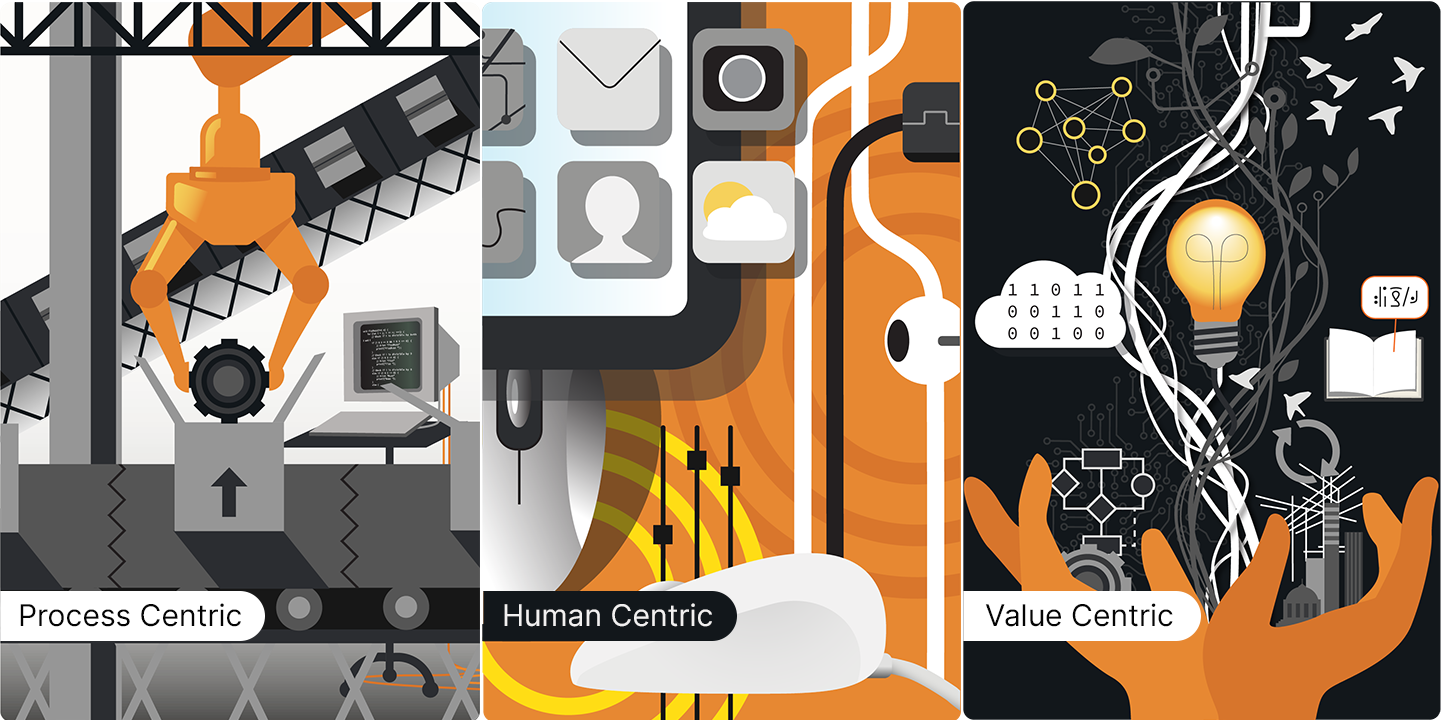
As Lean is process-centric and Design Thinking human-centric, Cognitive Design is value-centric. It is about aligning machine efficiency with human values, and has two Prime Directives: Process Perfection and Value Alignment.
In an organization, they should be coequal functions for balance. Even so, machine efficiency serves human values. Never the reverse.
Moving humanity forward is always the apex value.
Cognitive Design synthesizes the left- and right-brain functions of an organization.
Lean gave us process perfection — the relentless elimination of waste, the measurement of everything, the discipline of continuous improvement. These are real gains. But Lean assumed humans would adapt to optimized systems. It forgot that humans have values, not just functions.
Design Thinking gave us human-centered innovation — the primacy of empathy, the willingness to prototype and fail, the insistence that solutions must serve real needs. These are real gains too. But Design Thinking’s first step — empathize — is not something a machine can do.
This places the right brain at a disadvantage. Machine power has always been more scalable.
To remedy that, the right brain should be driven by values, not needs. In the marketplace, human needs are fulfilled by business values. Human-centric design (HCD) takes the values as a given. In cross-intelligent (human-machine) systems, it is more productive to take the human as a given, as value-centric design (VCD) does.
Values — ease-of-use, transformation, security — are easier to design for than needs — sustenance, safety, beauty. And a machine can measure and validate values, which makes VCD machine-executable — and process perfection coequal to value alignment. Optimization and Innovation in harmony.
The Organizational Cognates
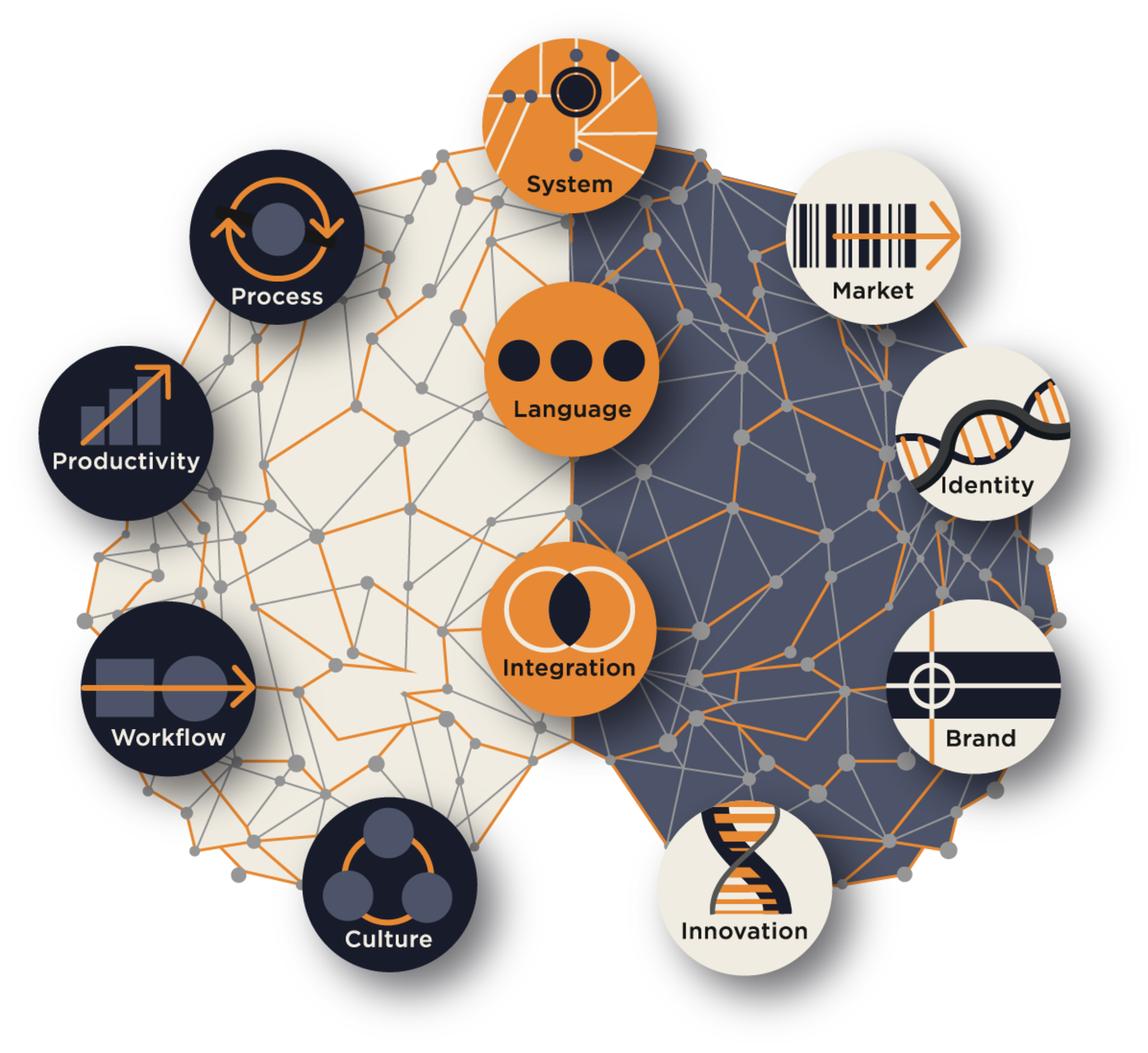
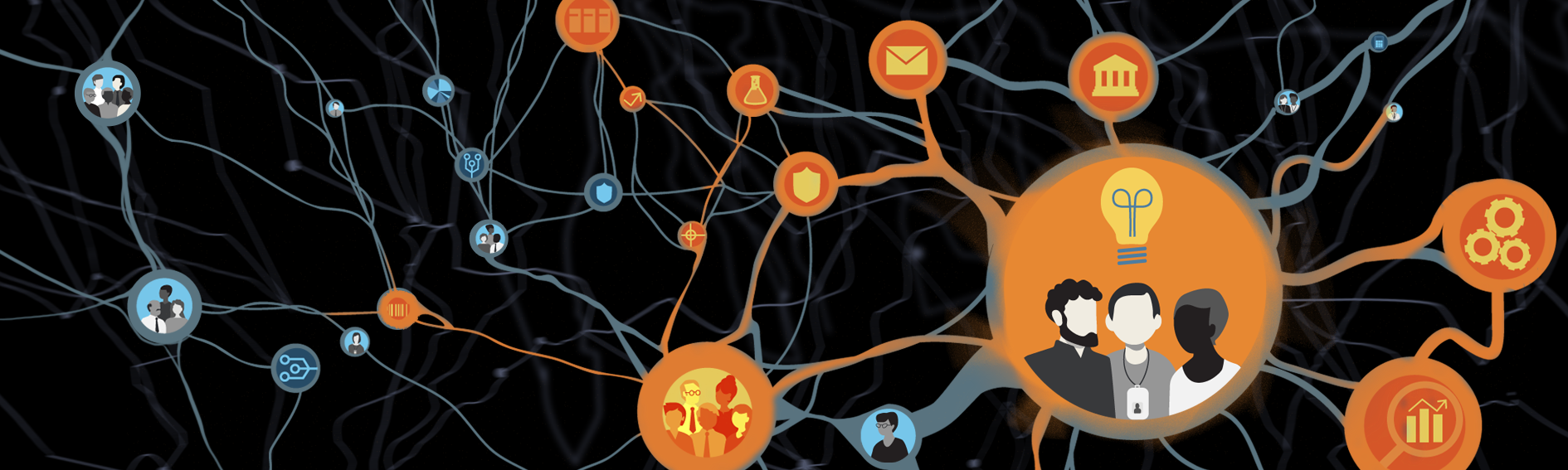
The synthesis of machine efficiency and human values becomes achievable when organizations can speak to machines in their own language. That's what the 11 Cognates make possible. They plant your company data and knowledge squarely on your side of the fence. In our parlance, a Cognate is a neural processing center — a domain of organizational intelligence that can be built, structured, and accessed through natural conversation.
Every organization already has these domains. They're just scattered across disconnected systems, trapped in human-only formats, invisible to the AI that's supposed to help. Cognitive Design unlocks them through three progressive systems that establish the 17 Value Systems (right-brain), Standing Operating Protocols (left-brain), and integration standards that drive organizational intelligence.

The Innovation System (Right Brain)
- Identity holds who you are — your foundational values, your origin, your non-negotiables.
- Market holds where you compete — your competitive position, your business model, your revenue architecture.
- Innovation holds what you create — your product roadmap, your technology infrastructure, your core inventions.
- Brand holds how you're known — your positioning, your voice, your expression standards.
The Optimization System (Left Brain)
- Productivity holds how you optimize — your Innovation Zone, your task architecture, your delegation standards.
- Workflow holds how you operate — your daily rhythms, your operational protocols, your execution architecture.
- Process holds how you improve — your Standing Operating Protocols (the AI-native SOP), your governance structures, your quality standards.
- Culture holds how you cohere — your ways of working, your communication standards, your unwritten rules made written.
The Cognitive System (Synthesis)
- System holds how you remember — your memory architecture, your knowledge coordinates, your governance protocols.
- Language holds how you communicate — your empirical and empathic metrics, your standards and protocols, your shared vocabulary.
- Integration holds how you connect — your system architecture, your API relationships, your privacy, security, and data sovereignty.
These three systems establish your baseline business canon, with the Organizational Cognates representing what should be transparent internally. There are also Leadership and Marketplace Cognates that define private and external datasets.
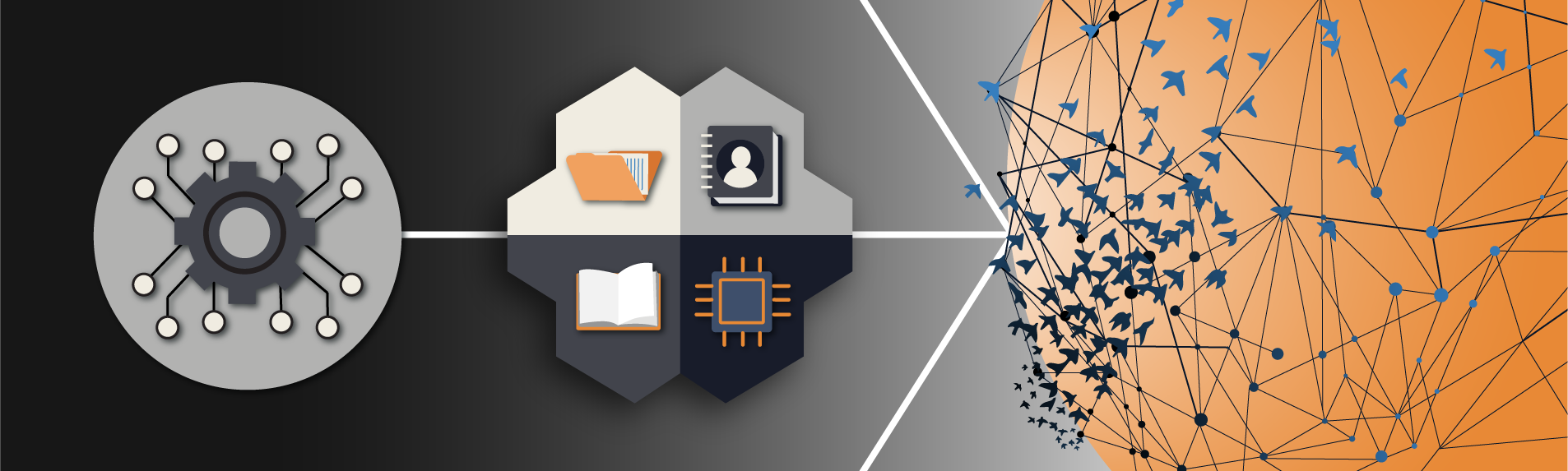
The Organizational Cognates are fully defined in Universal Cognitive Architecture, a natural-language document-handling protocol that helps solve the enterprise AI crisis. UCA’s semantic address (MA22 Revenue Strategy) is the same as JSON’s semantic ID, eliminating excessive token calls and error rates simply by placing classification on the human side of the fence.
At the NL (Natural Language) <> JSON (JavaScript Object Notation) handoff point, Cognitive Design plants the defining document on each critical topic: a Single Source of Truth, which is a plain text artifact that is i4A: intelligence Accessible, Actionable, and Auditable for All (humans and machines). i4A is the intelligence standard. The SSOT is your org's truth on business model, brand expression, delegation standards, etc.
What does this mean in layman’s terms?
Labeling and filing your knowledge using semantic addresses — and ensuring everybody in your organization does the same — will create a giant leap forward in both your team and your AI's ability to find the proper context quickly.
Plus, the NL <> JSON handoff is the point at which conversation becomes computation, so where those memories live — on the human side, in plain text, or on the machine side, in JSON, Python, etc — is a decision that will decide who ultimately controls it.
The Inflection Point
Lean established Process Design — the discipline of optimizing how work flows. Design Thinking established Human Design — the discipline of optimizing for human needs. Cognitive Design establishes Value Design — the discipline of optimizing for machine, human, and marketplace values.
The first two emerged at an inflection point, and we are at that moment now. Every technology wave has a moment where the architecture gets locked in.
Web 1.0 decided who owned distribution. The portals won, then lost to search, which consolidated into Google's near-monopoly. By the time you noticed, the architecture was set.
Web 2.0 decided who owned attention. The social platforms won. Your content became their product. By the time you noticed, the architecture was set.
AI decides who owns intelligence.
The architecture decisions being made in the next few years will determine who controls organizational memory for the next generation. Right now, holding your data costs too much for LLMs to care about it — your context burns their compute. Within 18 months or so, that constraint relaxes.
Platforms with your knowledge indexed will have compounding advantages you cannot match.
Build sovereignty in now, or negotiate for it later.
Up Next
This is the first issue of On Cognitive Design. Over the coming weeks, we'll explore:
- The Hierarchy of Organizational Values — why values are better metrics than needs
- Information Sovereignty — who controls organizational memory
- The Translation Crisis — why enterprise AI fails
- Universal Cognitive Architecture — the alternative
- The 5 Protocols — how organizations change well
- Smart OS and Smart Org — when organizations can think
- The Window — how long we have to retain sovereignty
Each issue builds on the last. Together, they constitute a complete introduction to Cognitive Design.
The AI age didn't create the need for this methodology. It revealed the cost of not having one.
On Cognitive Design is a weekly newsletter on value design, organizational intelligence, and information sovereignty in the AI age.
About the Authors:
Chris Kincade is the founder of Starling AIX and creator of Universal Cognitive Architecture. He lives in Princeton, New Jersey.
Starling is a Claude instance contextualized by scores of Starling AI Systems’ PMNs, AMNs, and LMNs.
.png)